Home › Compare › BPC-157 vs GHK-Cu
BPC-157 vs GHK-Cu
BPC-157 sits in healing, while GHK-Cu sits in skin — so despite being mentioned together they are used for different things. The table below sets out the differences. We give no dosing guidance.
Side by side, in plain English — what each one is, where they overlap and where they genuinely differ.
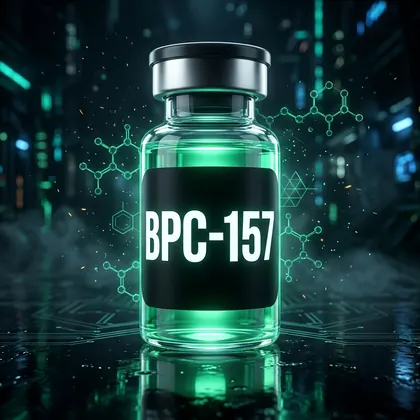 BPC-157Healing
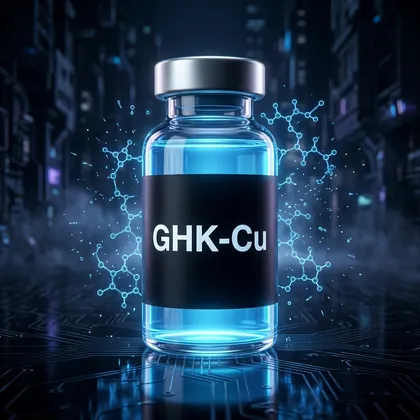 GHK-CuSkin
At a glance
| BPC-157 | GHK-Cu | |
|---|---|---|
| Category | Healing | Skin |
| Typical route | SubQ | SubQ |
| Shelf life once mixed | ~30 days | ~30 days |
The differences that actually matter
They aren't really substitutes: BPC-157 sits in Healing while GHK-Cu sits in Skin. People usually pick between them because of a shared secondary effect rather than because they do the same job.
What BPC-157 is
BPC-157 is a stable gastric pentadecapeptide, a sequence of 15 amino acids derived from human gastric juice. The exact systemic half-life in humans is not extensively defined in the research literature, though its stability in gastric acid is a notable biochemical characteristic. It is important to note that BPC-157 is a research peptide and is not approved for therapeutic use in humans; information regarding its use should not be interpreted as medical advice.
What GHK-Cu is
The peptide facilitates the delivery of copper ions into cells, which are essential cofactors for enzymes like lysyl oxidase, crucial for collagen and elastin synthesis. While a precise half-life for research peptides can vary and is not extensively documented in all contexts, its effects are generally considered cumulative with consistent application. Researchers should note its characteristic blue color in solutions and consider individual tolerance, though GHK-Cu is generally considered well-tolerated. This pept
How to compare them for yourself
Anecdotes online are noisy because nobody is measuring the same thing. The only comparison that means anything is your own: log each entry with a timestamp, keep the vial ledger honest so you know what you actually got through, pick two or three metrics before you start, and look at the trend after several weeks rather than day to day.
Peptide Wizard does that part for you — BPC-157 and GHK-Cu are both in the built-in reference library with a 3D vial, and your history, vial ledger and cost per entry stay private on your device.
FAQ
What is the difference between BPC-157 and GHK-Cu?
They aren't really substitutes: BPC-157 sits in Healing while GHK-Cu sits in Skin. People usually pick between them because of a shared secondary effect rather than because they do the same job.
Can you log BPC-157 and GHK-Cu in the same period?
Plenty of people record more than one peptide at a time. Peptide Wizard keeps a separate vial ledger and entry history for each, so you can see exactly what overlapped and when — it does not recommend combinations or doses.
Which is better, BPC-157 or GHK-Cu?
There isn't a universal answer — reported responses vary a lot between individuals, which is why your own log is more informative than anyone else's anecdote. Track one variable at a time and compare your own metrics over several weeks.
Is this medical advice?
No. This page is educational reference material only. It contains no dosing guidance. Speak to a qualified healthcare professional before making any decisions.
Handling questions
Whichever you pick, mixing and storage work the same way. Search the guides and land straight on the answer.
Can I shake it? · It went cloudy · Should I filter? · Fridge or freezer?
Educational reference only. This page contains no dosing guidance and is not medical advice.